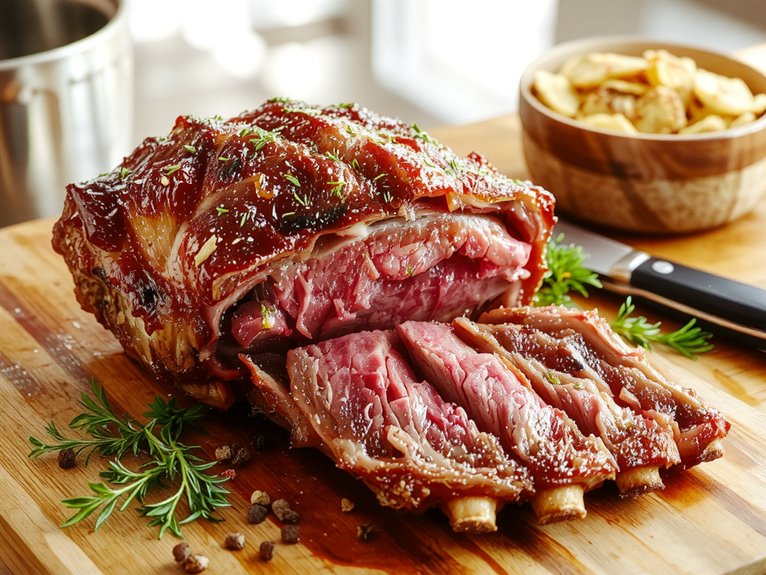
What You’ll Love About This Recipe
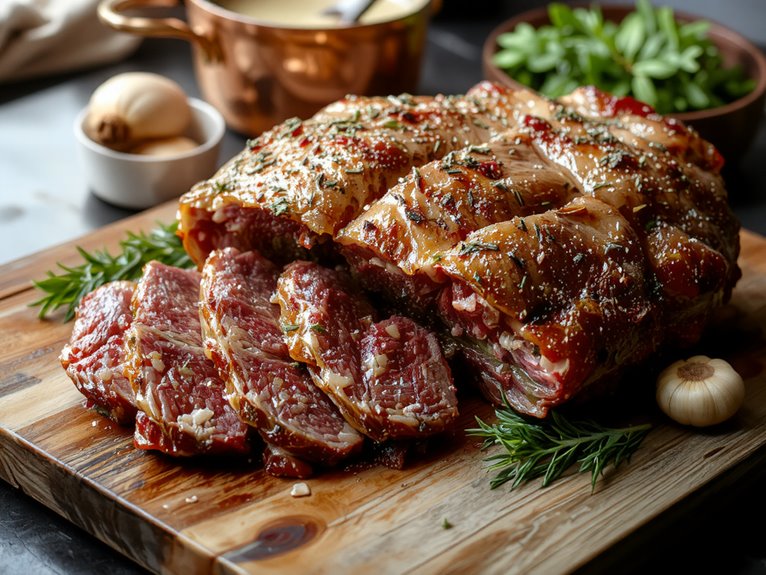
This homemade prime rib recipe is a game-changer for special occasions, delivering juicy, flavorful meat with a perfect crust every time. It’s easier than you think, and the results will impress everyone at the table.
- Rich, buttery flavor – The simple seasoning blend lets the natural taste of the beef shine, while the slow roasting keeps it tender.
- Crispy, golden crust – A quick sear at the end locks in juices and adds that irresistible crunch.
- No-fuss prep – With just a few ingredients and hands-off cooking, you’ll have a showstopping main dish without the stress.
Recipe
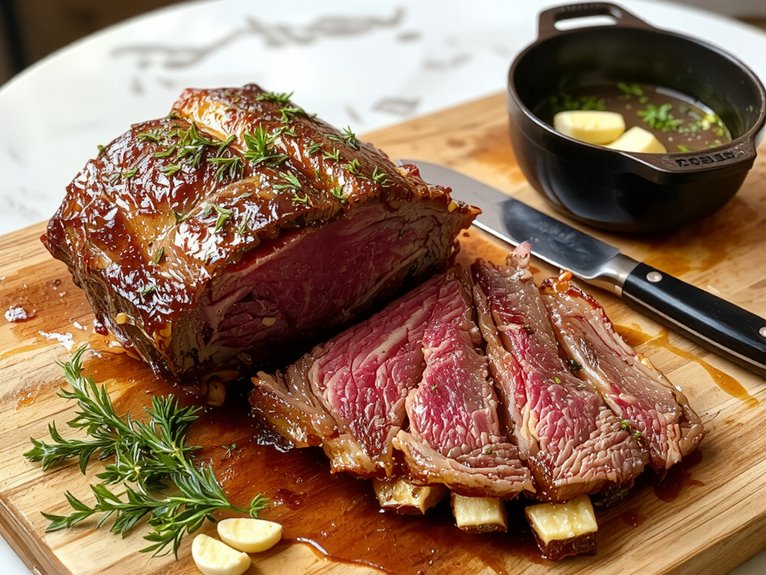
Prime rib is a classic holiday centerpiece known for its rich flavor and tender texture. This homemade prime rib recipe guarantees a perfect roast every time, with a flavorful crust and juicy interior. Follow these steps to create an impressive dish that will delight your guests.
Ingredients:
- 1 (4-6 lb) prime rib roast
- 4 cloves garlic, minced
- 2 tbsp fresh rosemary, chopped
- 2 tbsp fresh thyme, chopped
- 2 tbsp kosher salt
- 1 tbsp black pepper
- 2 tbsp olive oil
Instructions:
1. Preheat the oven to 450°F (230°C).
2. In a small bowl, mix garlic, rosemary, thyme, salt, pepper, and olive oil to form a paste.
3. Pat the prime rib dry with paper towels, then rub the herb paste evenly over the entire surface.
4. Place the roast bone-side down in a roasting pan. Insert a meat thermometer into the thickest part of the roast, avoiding the bone.
5. Roast at 450°F for 15 minutes to sear the outside.
6. Reduce the oven temperature to 325°F (160°C) and continue roasting until the internal temperature reaches your desired doneness:
- 120°F (49°C) for rare
- 130°F (54°C) for medium-rare
- 140°F (60°C) for medium
7. Remove the roast from the oven and let it rest for 20-30 minutes before carving.
Notes:
For best results, let the prime rib sit at room temperature for 1-2 hours before roasting. Use a meat thermometer to confirm accurate cooking.
Equipment:
- Roasting pan
- Meat thermometer
Time:
- Prep time: 20 minutes
- Cooking time: 2-3 hours
Cuisine:
American
Serving:
6-8 servings
Nutrition
Prime rib is a rich and flavorful cut of beef that provides essential nutrients. Here’s a breakdown of its nutritional content per serving.
| Nutrient | Amount per Serving |
|---|---|
| Calories | 300 kcal |
| Protein | 22 g |
| Fat | 23 g |
| Saturated Fat | 9 g |
| Cholesterol | 70 mg |
| Sodium | 60 mg |
| Potassium | 300 mg |
| Iron | 2.5 mg |
| Vitamin B12 | 2.1 µg |
What To Serve With It
When I serve prime rib, I love pairing it with classic sides like creamy mashed potatoes and roasted vegetables—they balance the rich flavors perfectly. For drinks, a bold red wine, like Cabernet Sauvignon, really complements the meal and adds an extra touch of elegance. Trust me, these combinations make the whole dinner feel special and complete.
Side Dishes
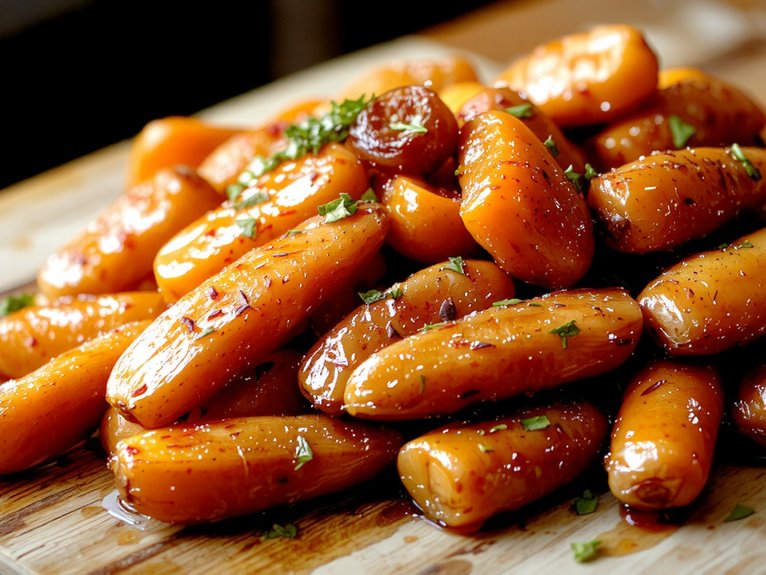
Since a perfectly cooked prime rib deserves sides that shine just as brightly, I’ve found that pairing it with flavorful, complementary dishes makes the meal truly special. Creamy mashed potatoes, rich with butter and garlic, are my go-to. Roasted vegetables, like carrots or Brussels sprouts caramelized to perfection, add a sweet, earthy balance. I love a crisp Caesar salad for freshness or cheesy scalloped potatoes for indulgence. Yorkshire pudding, golden and airy, soaks up the juices beautifully. Don’t forget a horseradish sauce for a tangy kick. These sides elevate prime rib into a feast worth savoring.
Wine Pairings
For a rich dish like prime rib, I always think a great wine pairing can take things to the next level. A bold Cabernet Sauvignon is my go-to—its deep flavors of blackberry and oak complement the meat’s richness perfectly. If you prefer something smoother, a Merlot works wonders, with its velvety texture and hints of plum. For white wine lovers, a buttery Chardonnay balances the dish’s heaviness. And if you’re feeling adventurous, try a Syrah for its peppery kick. Just remember, the wine should enhance, not overpower, the star of the show—your perfectly cooked prime rib. Cheers!